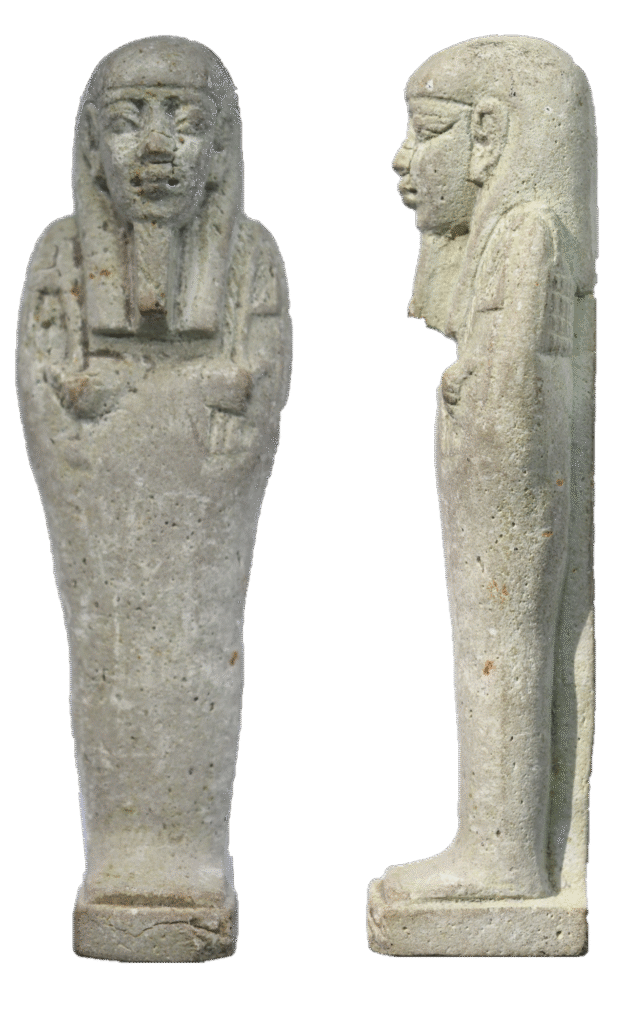
An Ancient Egyptian faience ushabti from the Late Ptolemaic Period.
Shabtis, or Ushabtis, are the inseparable companions of ancient Egyptians, buried with the deceased among other grave goods.
The Egyptians believed that the afterlife was a mirror image of the world they knew, with the shabtis becoming servants for the deceased in the next world.
Artefact: Ancient Egyptian Ushabti Period: Late Period – Ptolemaic Estimated Age: 2000 – 2600 Years
The practice of using shabtis goes back as early as the Old Kingdom (2686 – 2181 BC).
The more of these afterlife servants the deceased could afford, the less work they would have to do themselves. Traditionally there would be one shabti per day of the Egyptian year, with one overseer shabti per Egyptian week – totalling up to 401 shabtis per grave.
Artefact Features
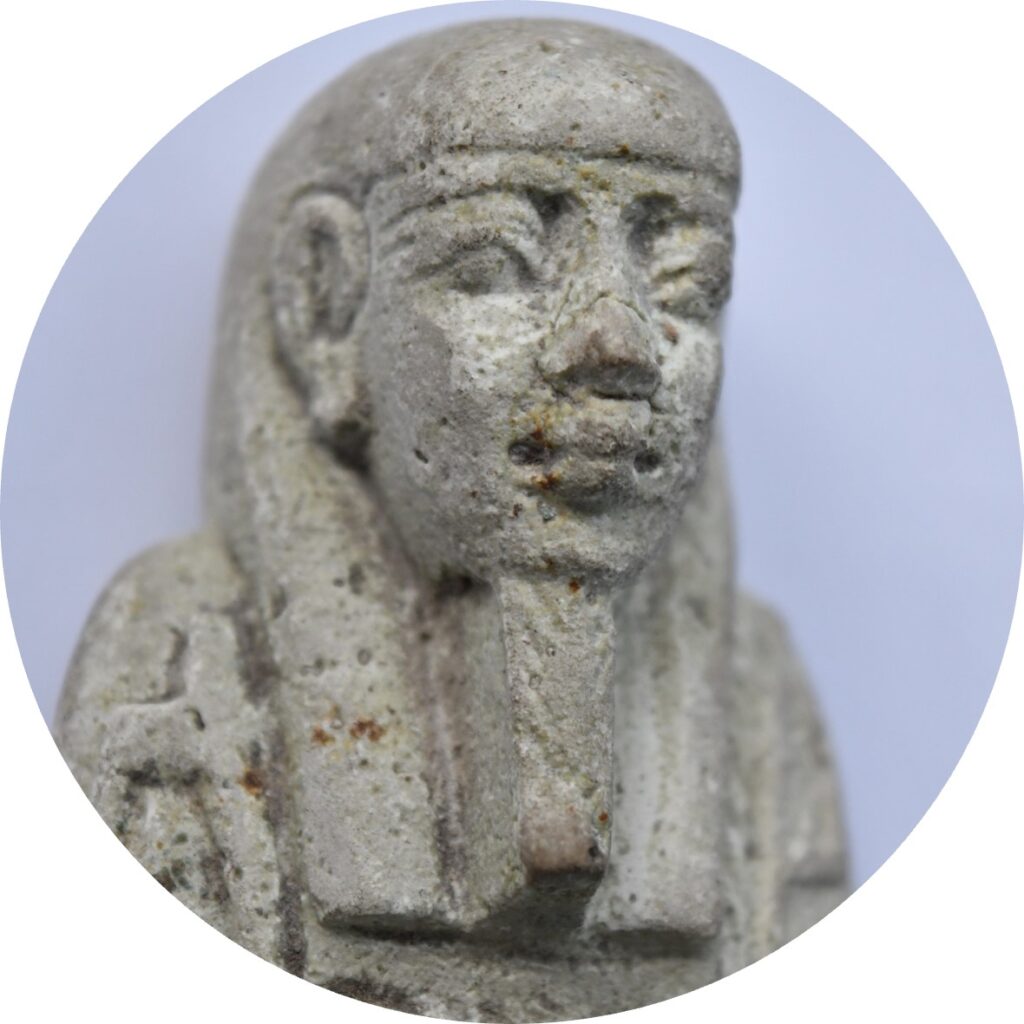
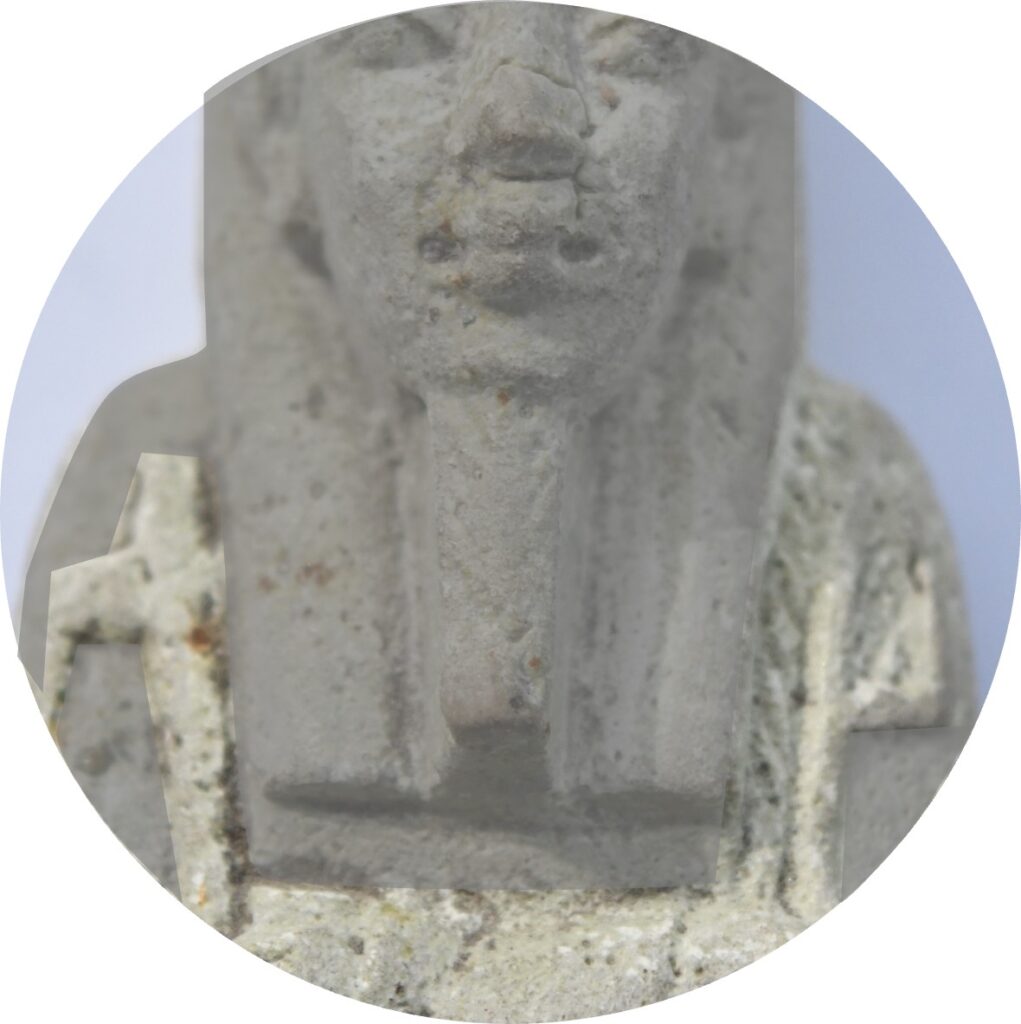
Well detailed face with a plain tripartite wig and an artificial divine plaited beard. Usually shabtis of this detail would also have the name of the deceased inscribed into the body in hieroglyphics – making the omittance on this artefact an oddity.
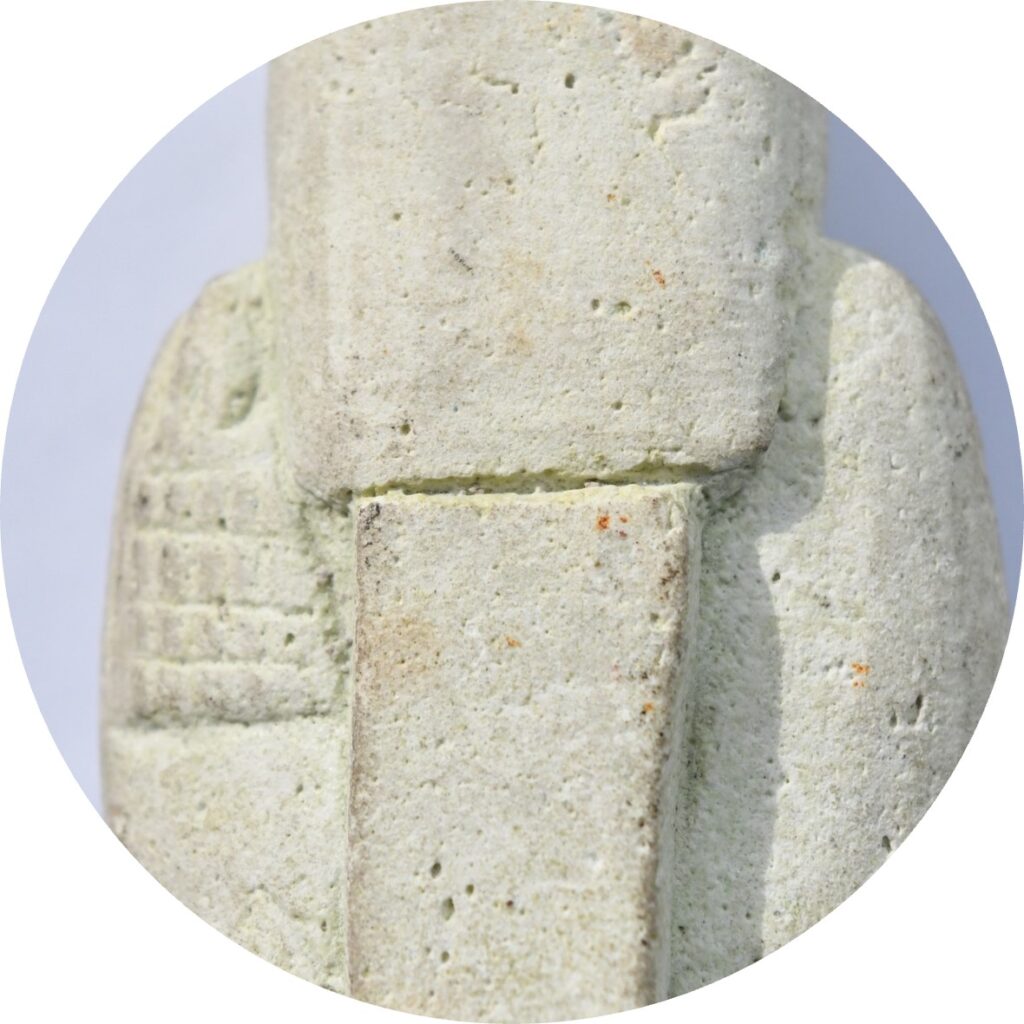
As a worker shabti, this figure features crossed arms with a narrow hoe in the right hand and a pick in the left hand for working in the fields. The figure also features a cross fibre basket slung over the left shoulder.