Dinosaurs: Dawn to Destruction
The Triassic Period
251 - 201 Million Years Ago
The Triassic was a geological period that marked the end of the Permian age and saw the first Dinosaurs find their place in a chaotic world.
A Violent Beginning
This period began after the Permian-Triassic Extinction Event, either a major volcanic event or another meteorite impact, which wiped out 70% of terrestrial vertebrae species and 80% of marine species, including the Trilobites.
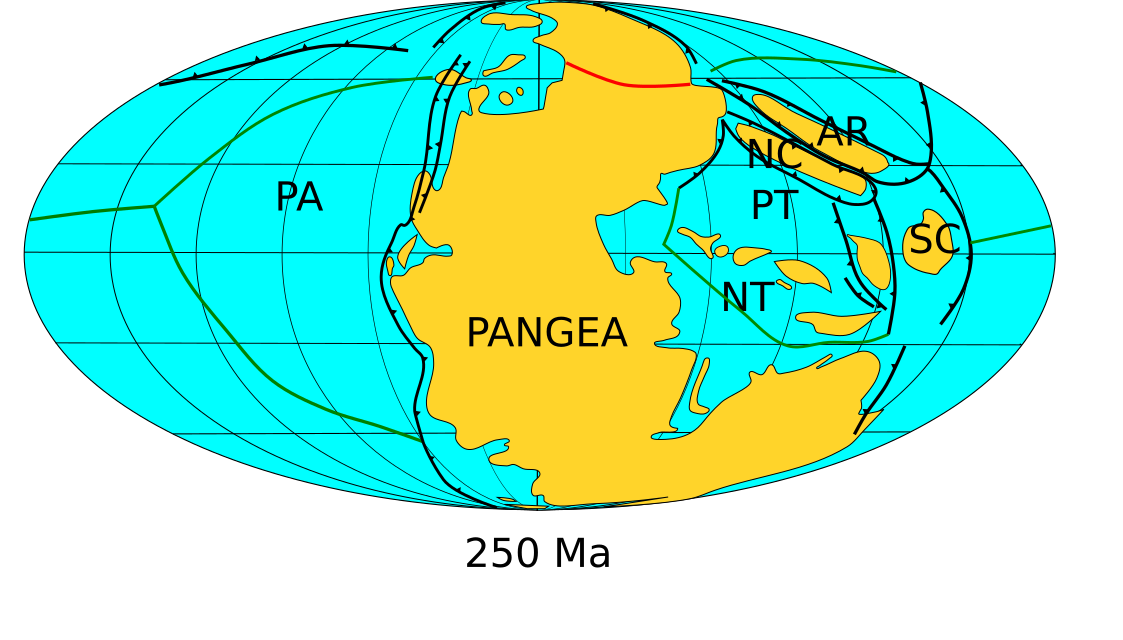
The Pangea Supercontinent would eventually break apart and form the continents we see today.
After surviving the P-T Extinction Event, life would have to find a way to survive on Pangea; a supercontinent comprising of all of Earth’s landmass.
The early Triassic Period was a free-for-all for survival, with the first mammals and reptiles challenging for global dominance.
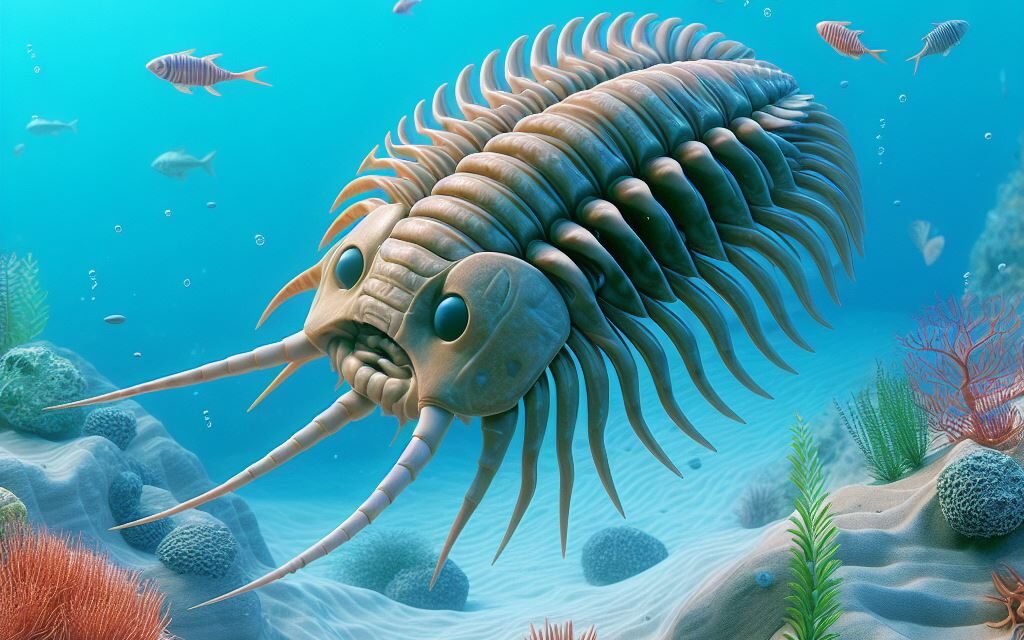
Trilobites and dinosaurs did not coexist, they were all extinct by the end of the Permian-Triassic Extinction Event.
Dawn of the Dinosaur
Amongst these early reptiles were a sub-group called Archosaurs. Over the course of the Triassic, the dominant Synapsids of the Permian-Age began to decline; allowing Archosaurs to thrive and diversify.
The Archosaurs include various Mesozoic groups such as crocodilians, birds, pterosaurs and the Dinosaurs.
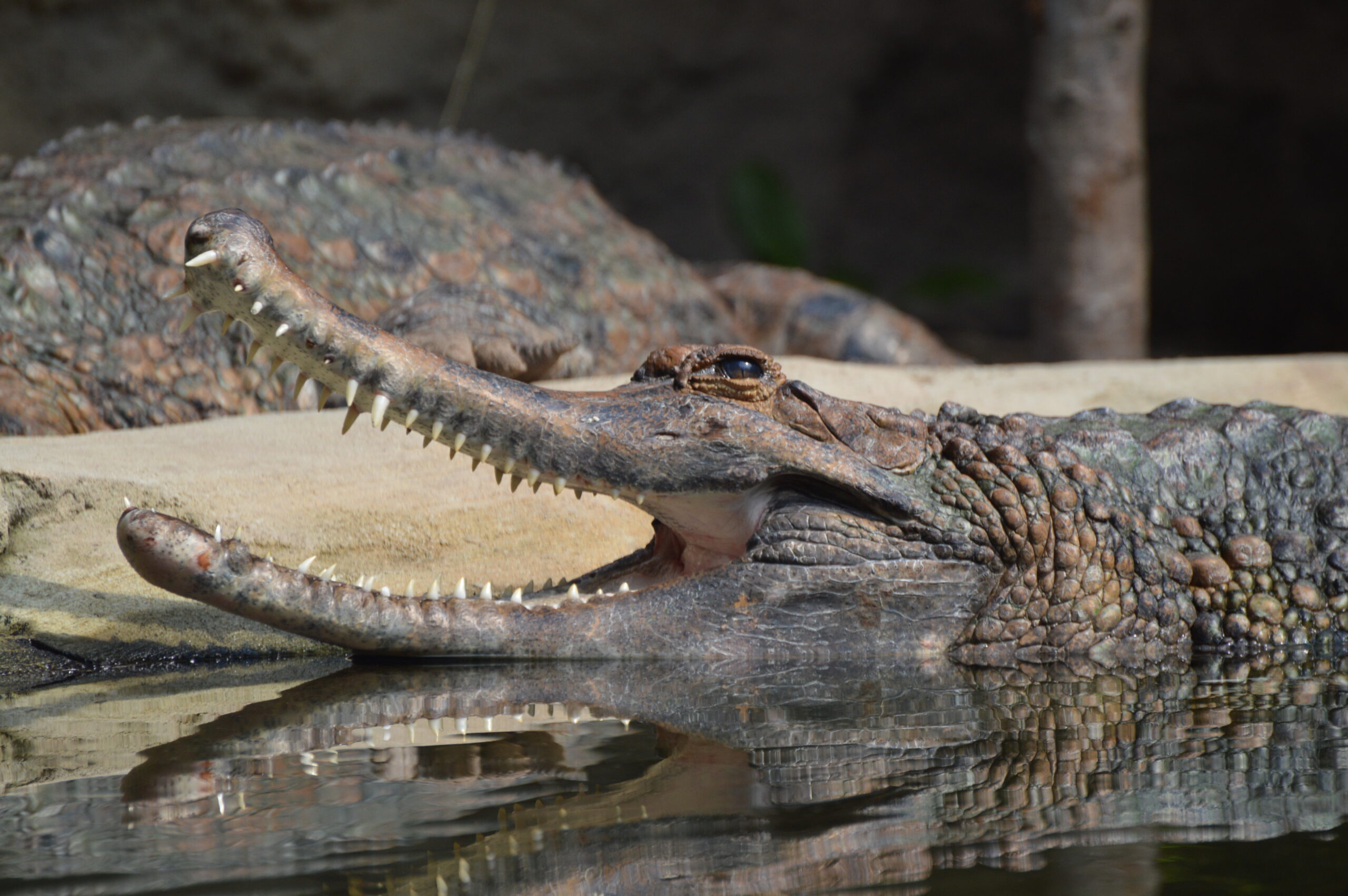
Crocodilians evolved from reptiles that predate dinosaurs and still live, over 200 million years later.
Dinosaurs started to become an established group around the mid-point of the Triassic Period.
These small creatures would have scurried across the landscape, trying to survive amongst much more dominant Archosaurs and Synapsids.
A key characteristic of Dinosaurs was their leg structure. Dinosaurs had straight legs which were perpendicular to their bodies whereas other animal groups had legs that sprawled outwards (think of the difference between an ostrich and a crocodile).
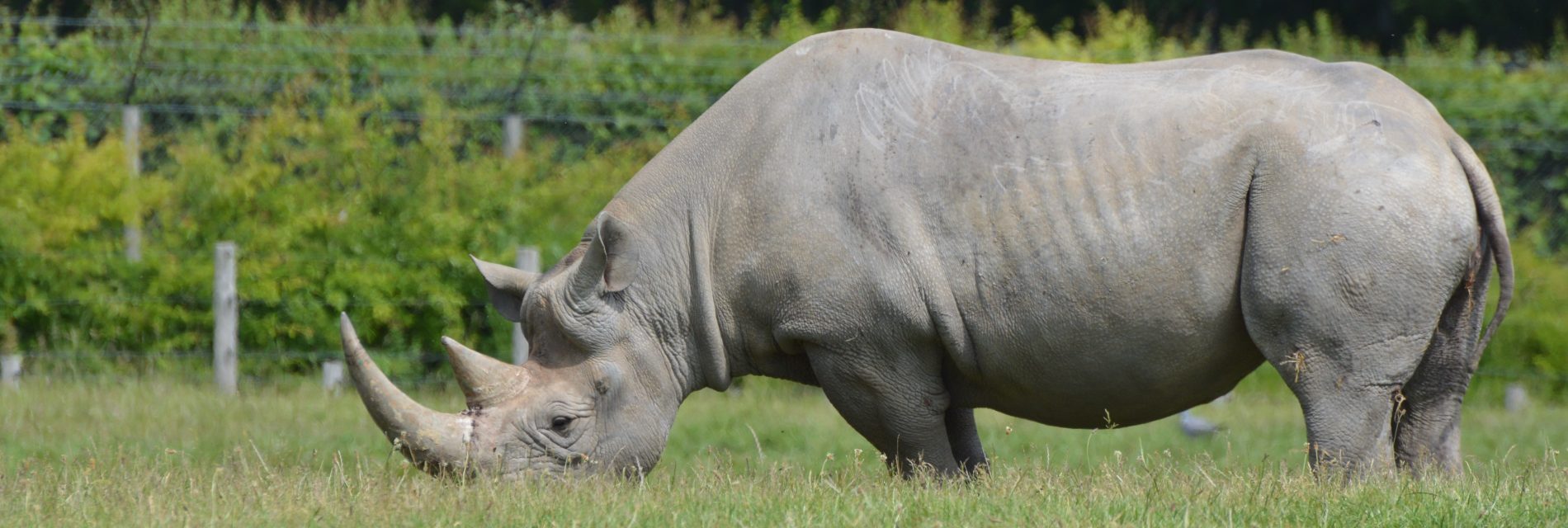
Synapsids lost superiority during the Triassic but a surviving sub-group, Mammals, would outlive all dinosaurs.
This leg structure allowed Dinosaurs to use less energy to move than other reptiles.
As resources become scarce in an unforgiving landscape, this natural efficiency was the difference between surviving and going extinct.
Over millions of years, this advantage allowed the planet’s dinosaur population to survive and spread.
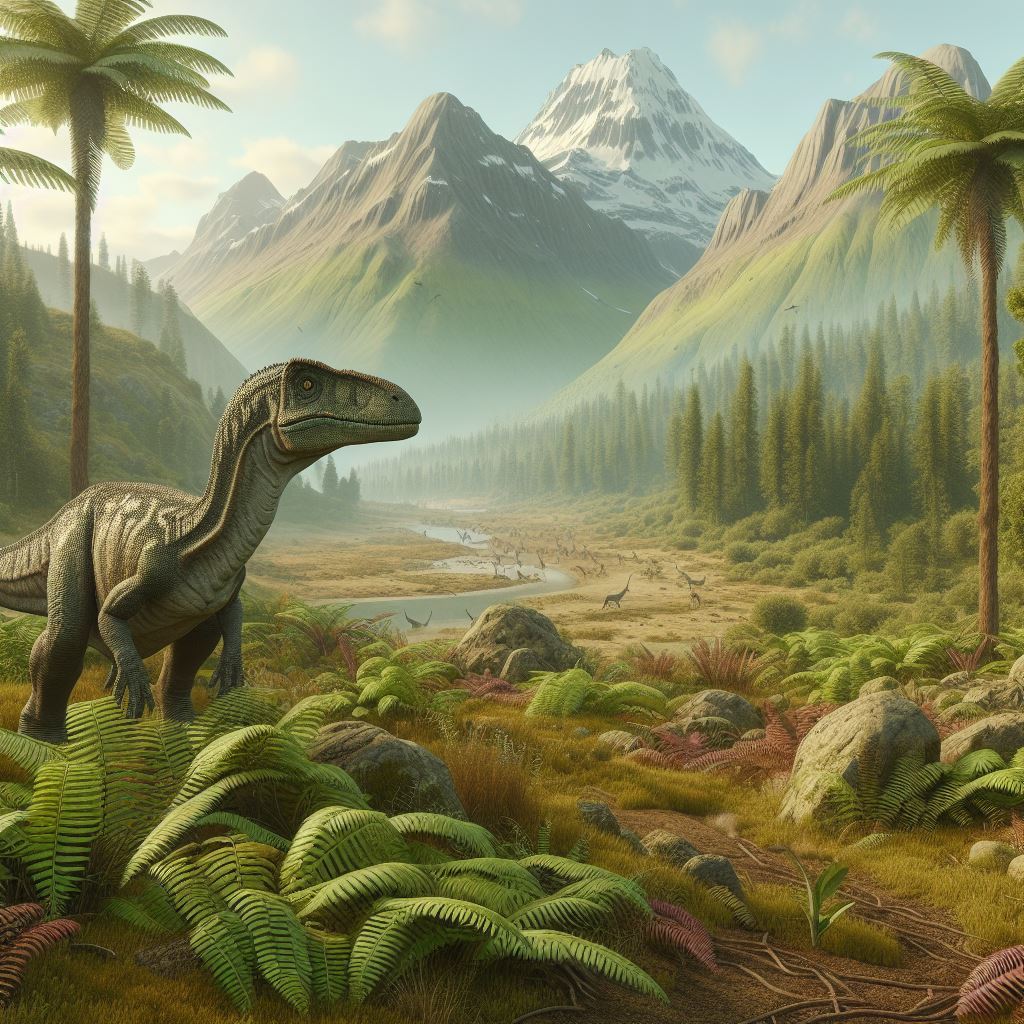
This included the Herrerasaurus, a bipedal (two legged) carnivore discovered in Argentina.
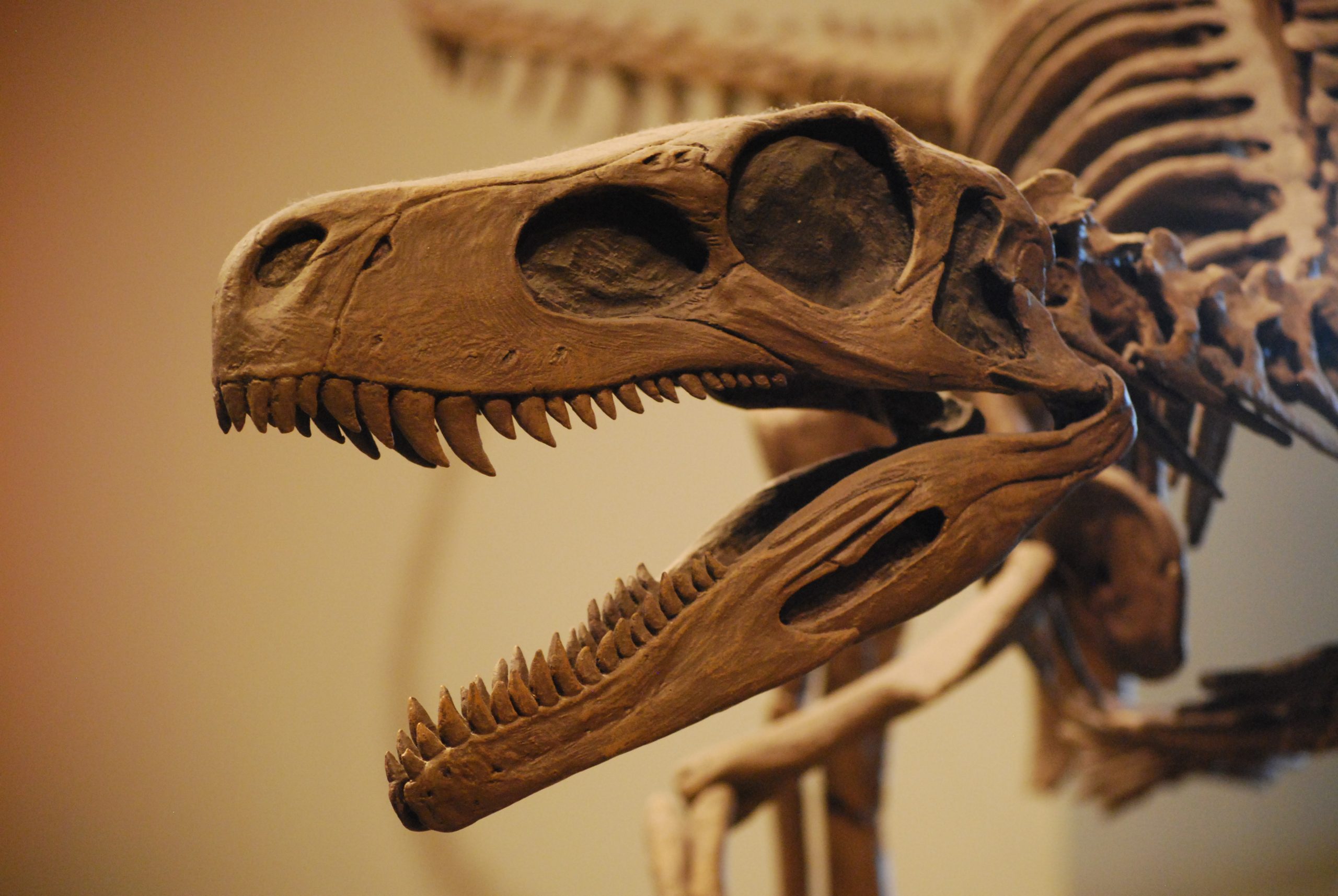
Herrerasaurus is one of the oldest dinosaurs on record (c.241 million y.a.) and may not even be a dinosaur at all, instead being a ‘transition’ species between another Archosaur group and the dinosaurs.
Life on land would continue to fight for survival on Pangea for 50 million years, spreading from the forests of conifers and ferns (grass had not evolved yet) to the arid central regions.
It took approximately 8 million years for sea life to recover from the P-T extinction event. Eventually, the oceans were home to a wide variety of creatures including Ammonites, and Archosaurs such as Plesiosaurs and the dolphin-like Ichthyosaurs.
However, it wasn’t until the Jurassic Period where the Dinosaurs truly began to dominate the Earth.
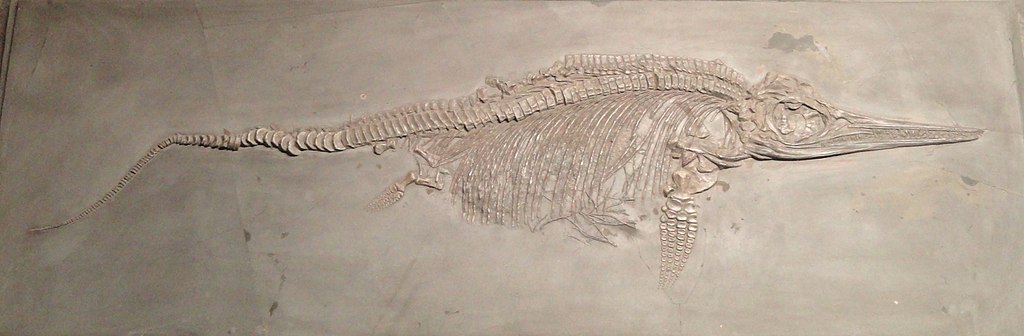
Ichthyosaurs were successful sea predators, growing to large sizes and survived well into the Cretaceous period.
The Jurassic Period
201 - 145 Million Years Ago
The Jurassic was a geological period where the Dinosaurs had established their dominance across the globe, allowing them to grow into the notorious giants we know today.
Pangea begins to split
The Triassic Period ended how it began, with another large extinction event. The Triassic-Jurassic Extinction Event was violent and volcanic with current studies blaming the initial separation of the supercontinent, Pangea.
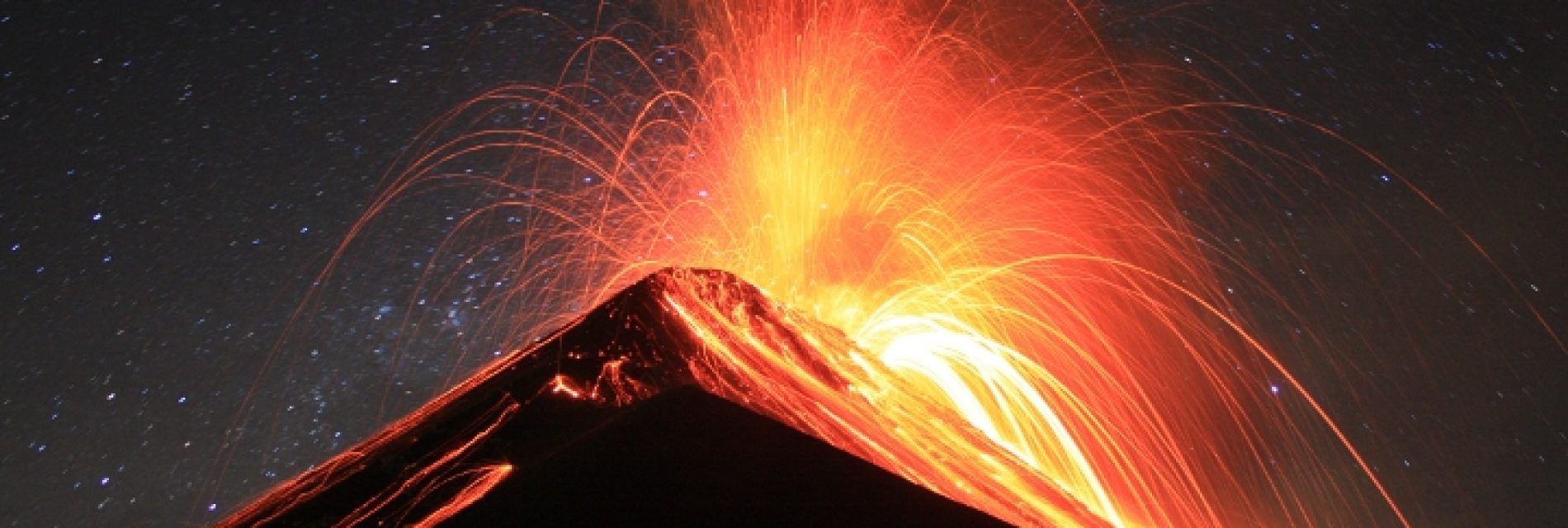
Just as Triassic life had recovered from the ‘Great Dying’ event of 250 million years ago, the world was once again plunged into volcanic turmoil.
Fissures in the Earth’s crust pierced down into the mantle, unleashing walls of lava and Carbon Dioxide.
As the continent began to pull apart (along the line that is now the east coast of the Americas and the west cost of Africa), water flooded the space in between. This would eventually become the Atlantic Ocean.
As the Earth’s tectonic plates pulled and crushed into each other, new underwater mountains would rise, raising sea levels even higher onto the separated continents.
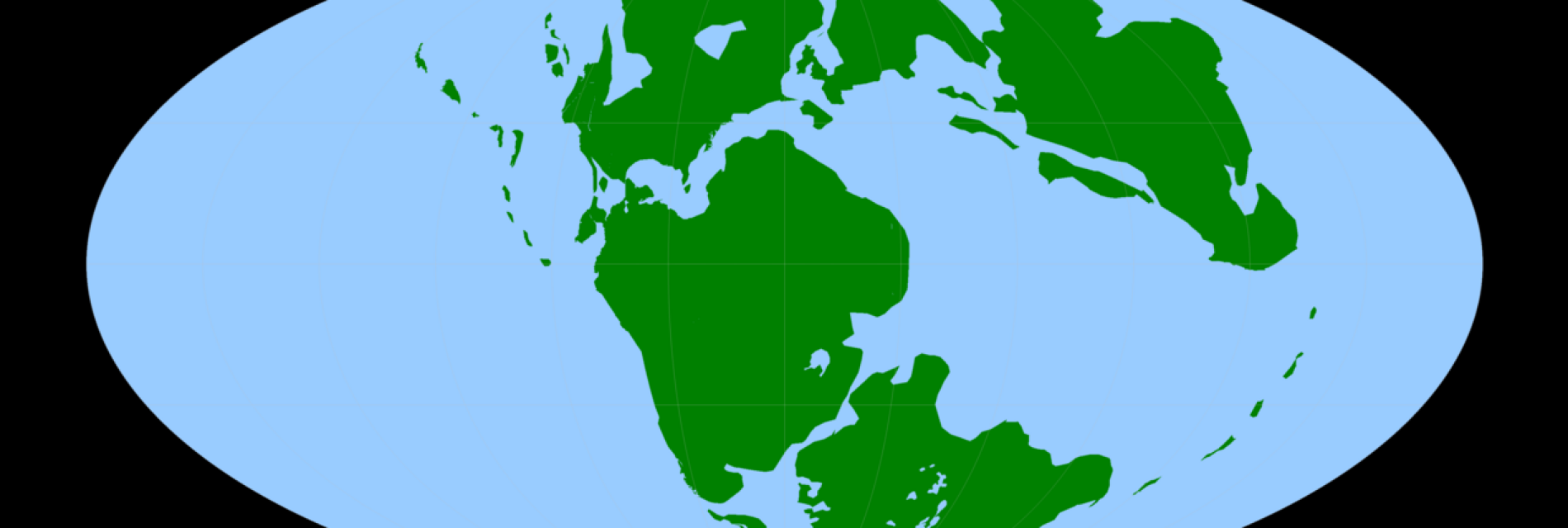
Pangea slowly broke apart over millions of years. By the middle of the Jurassic, the land mass of modern day North America had broken away to the north of what would eventually separate into South America, Africa and Antarctica.
The volcanic activity, and associated climate change from the significant emissions of Carbon Dioxide resulted in another global extinction event that would wipe out approximately 75% of all marine and terrestrial life.
The only surviving Archosaurs were the dinosaurs, crocodiles, pterosaurs, birds and sea reptiles.
Only small mammalian Synapsids remained.
The new humid, sub-tropical climate allowed dinosaurs to become the dominant force on the planet and grow to massive sizes.
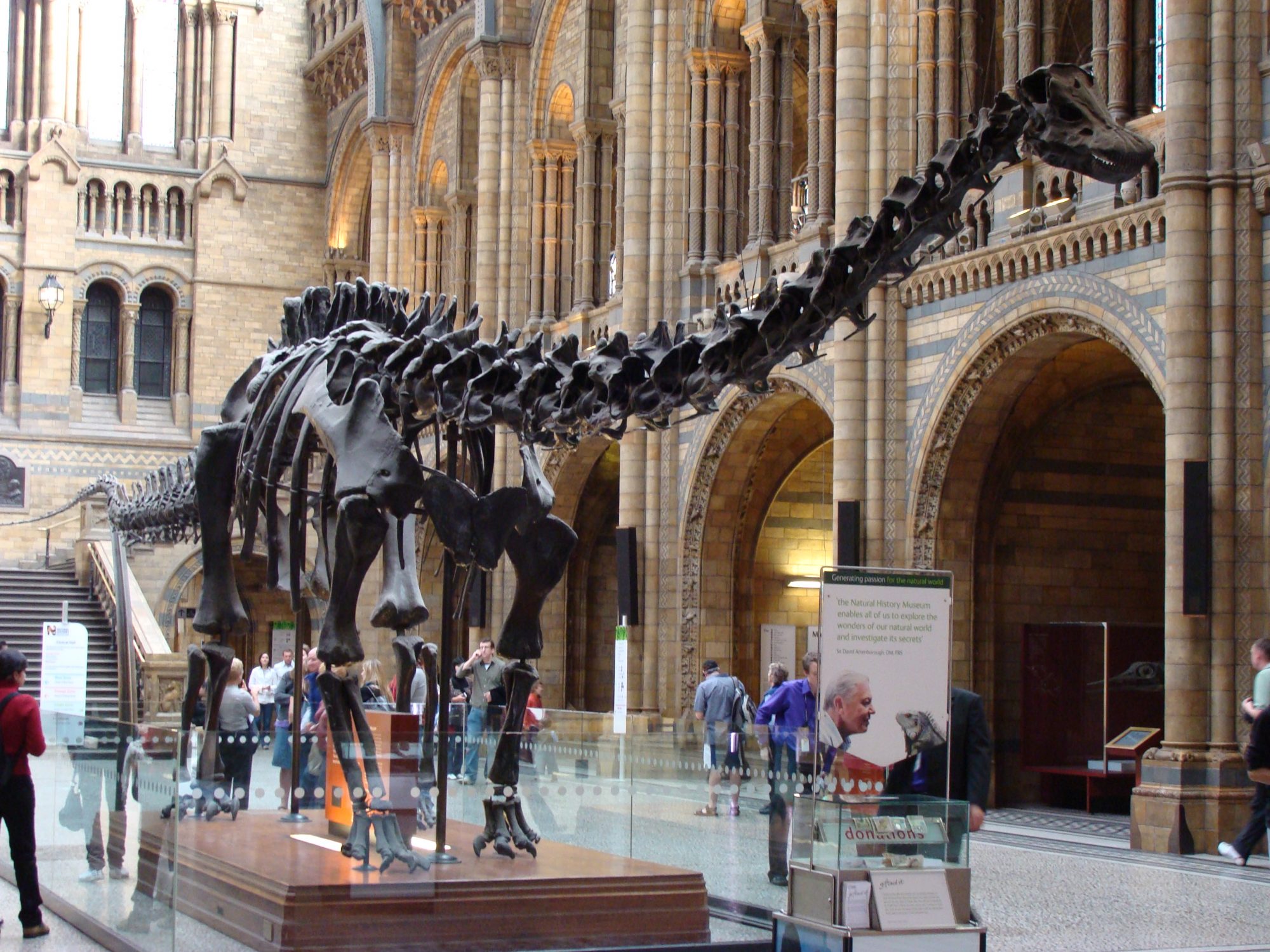
Sauropods, a clade of dinosaur, had survived the Triassic-Jurassic extinction event and would evolve throughout the Jurassic Period into giants such as Diplodocus.
Dinosaurs begin to thrive
Dinosaurs were initially bipedal (two-legged) Archosaurs. However, as Dinosaurs began to dominate the Jurassic period, they also diversified.
Whilst the bipedal blueprint was successful for predatory dinosaurs, herbivorous dinosaurs began to evolve into four legged animals.
This may have began from herbivores utilising forelimbs to forage for vegetation or from simply requiring extra support to carry their increasingly heavy frames.
Larger, bulkier animals could have also benefited from herd protection from predators as seen in modern day animals such as Elephants and Wilderbeest.
The success of bipedal predators however meant that carnivorous dinosaurs had no evolutionary demand for a similar change. As such, no four legged carnivorous dinosaurs have been found.
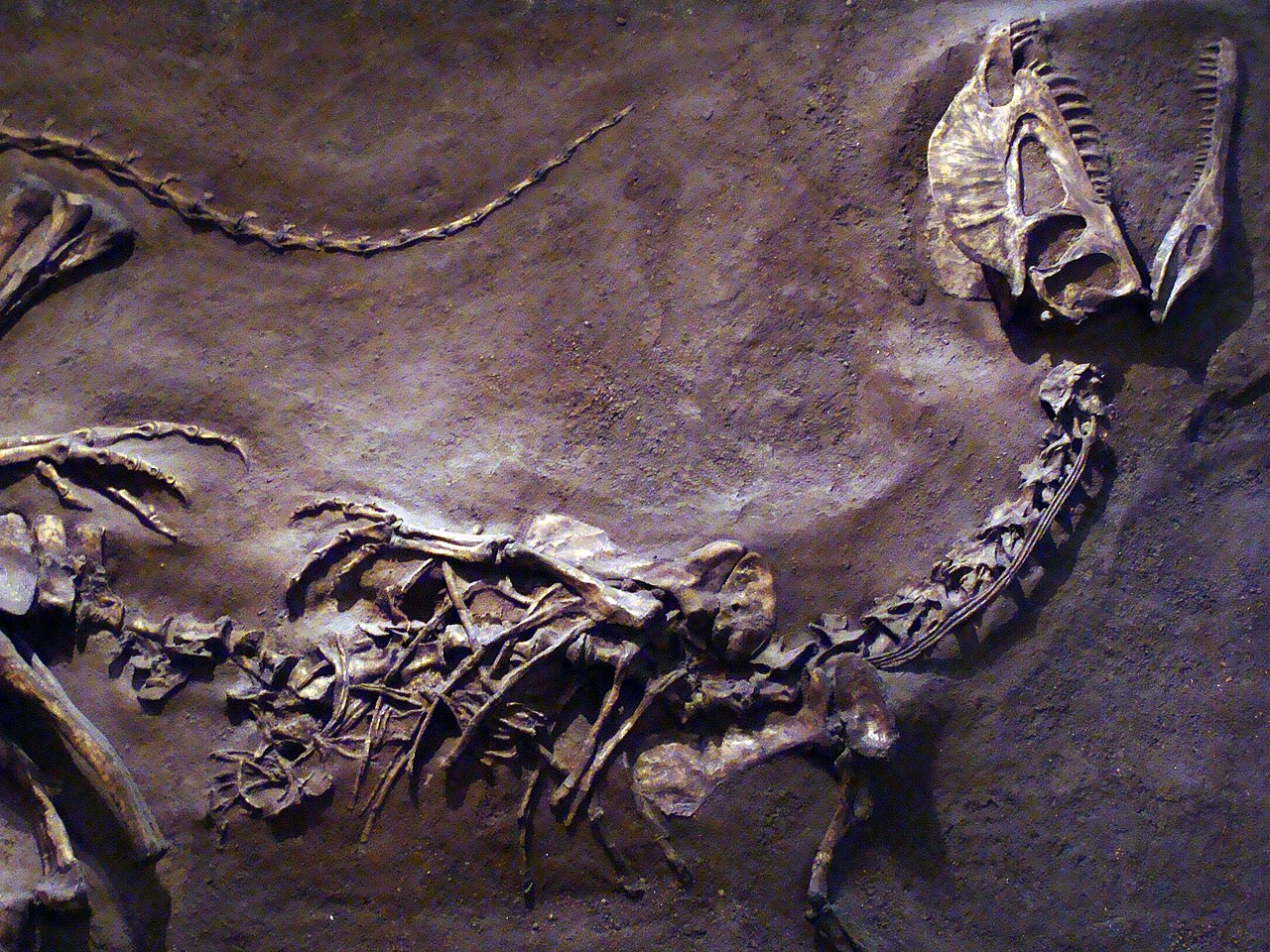
Dilophosaurus, distinguished by the crests along the top of its skull, is the largest known North American theropod during its time in the early Jurassic.
The Jurassic diversification of the dinosaurs allowed a wide variety of groups to evolve.
Sauropod dinosaurs, such as Diplodocus, are characterised by their famous long necks and tails and would become giants, grazing from the tree-tops.
Ornithopod dinosaurs began to diversify, resulting in large herbivores such as Iguanodon by the Cretaceous.
Thyreophora dinosaurs emerged, including armoured herbivores such as Stegosauria (vertical plates and spiked tails) and Ankylosauria (plated body, some with clubbed tails).
And finally, the latest Theropod dinosaurs. Bipedal predators that survived the Triassic and evolved into large, specialised hunters such as Dilophosaurus, Ceratosaurus and Allosaurus.
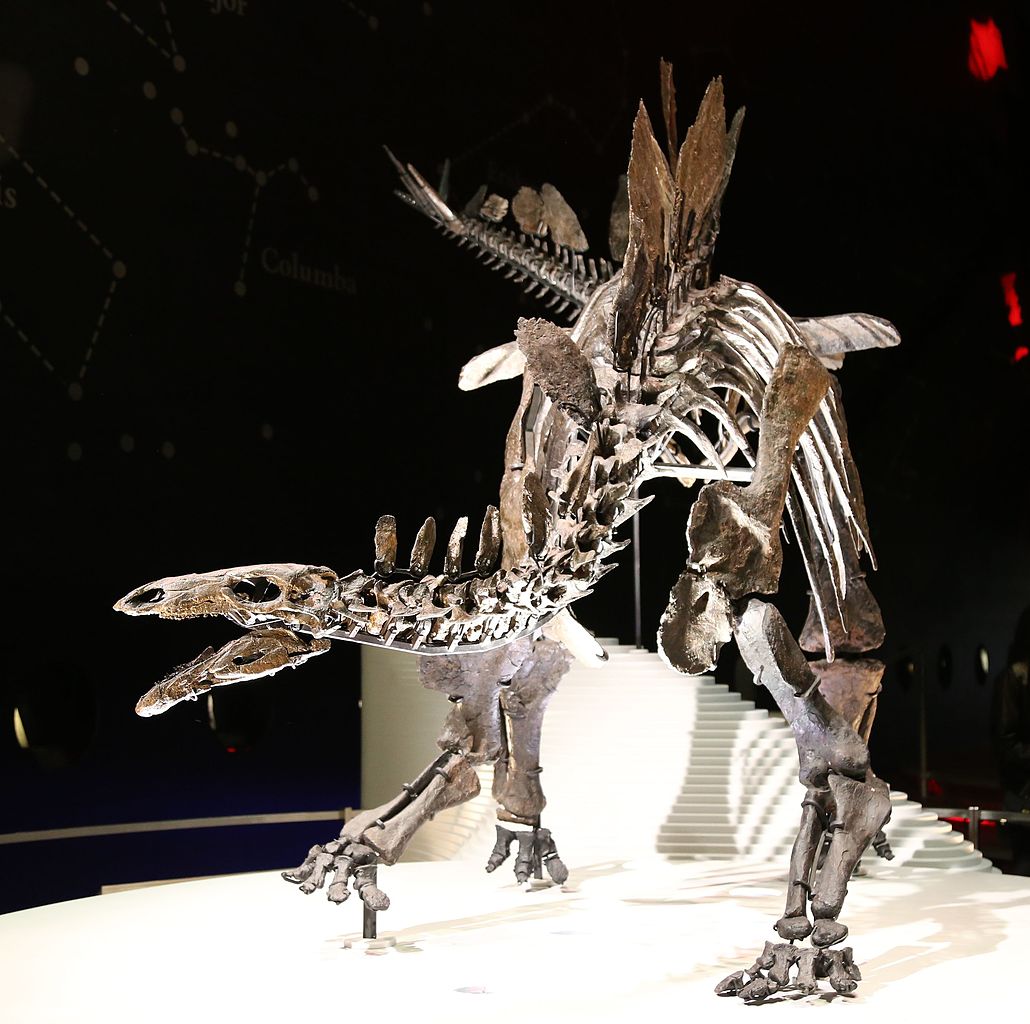
Stegosaurus, one of the most famous dinosaurs of all time, was a herbivore with iconic plates along its back and defensive spikes (thagomizers) on its tail.
As dinosaurs thrived in the warm climate of the Jurassic, different species evolved across the new continents.
Therapod dinosaurs became more refined, with different skull shapes and body features evolving over time. As time progressed, more effective predators would emerge and dominate.
Whilst Dilophosaurus may have been the largest North American predator during its time in the Early Jurassic, these would eventually become extinct with Allosaurids being dominant by the Late Jurassic.
Allosaurids, a group of medium-large therapod dinosaur species, first appeared in the Mid Jurassic. This allowed them to spread across the planet before the continents separated enough to isolate dinosaur species, and their descendants, forever.
Allosaurid species in the northern Jurassic hemisphere (North America & Eurasia) would establish dominance, eventually resulting in apex species such as Allosaurus and Saurophaganax.
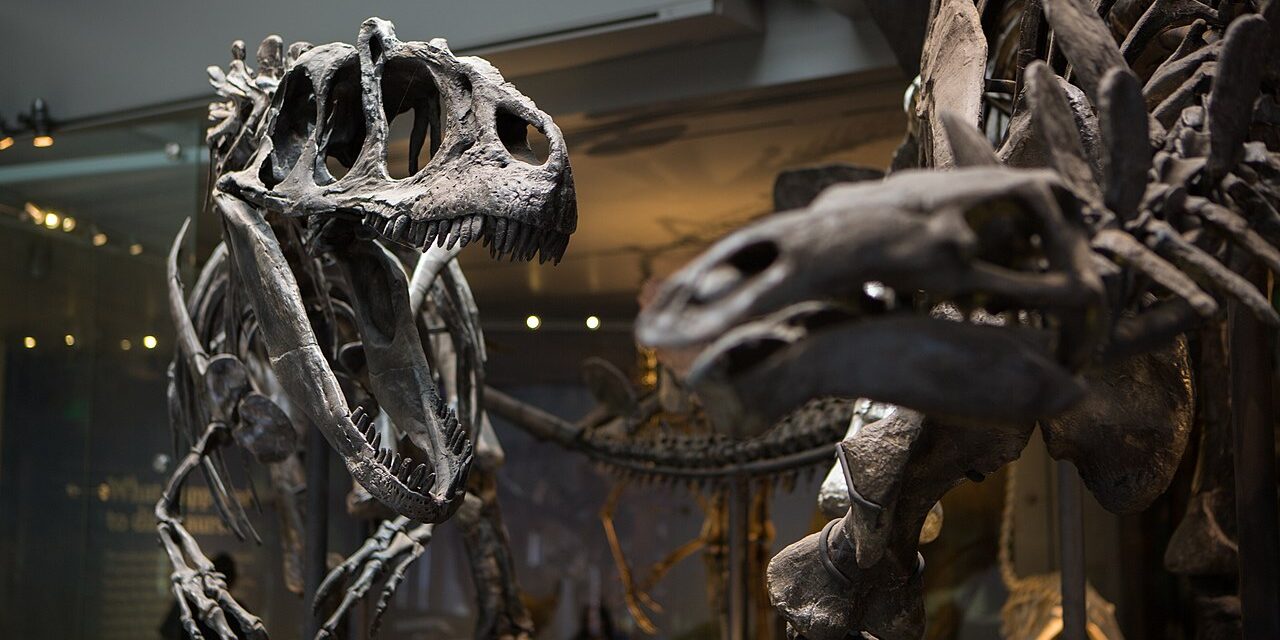
Allosaurus was a highly refined predator that lived among and preyed upon dinosaurs such as Stegosaurus and Diplodocus in North America.
However, as the Jurassic transformed into the Cretaceous Period, the Allosaurids would have to compete with a new group of predators, Tyrannosaurs.
The Cretaceous Period
145 - 66 Million Years Ago
The Cretaceous was a geological period where Dinosaurs had full dominance over the planet after 100 million years of evolution. However all dynasties come to an end, and the Dinosaur’s was sudden and catastrophic.
Species become isolated
The last geological period of the Dinosaurs, the Cretaceous, began more peacefully than both the Triassic and Jurassic.
The continents continued to drift apart, with modern day North and South America, Africa, Antarctica and Australasia breaking apart by the end of period.
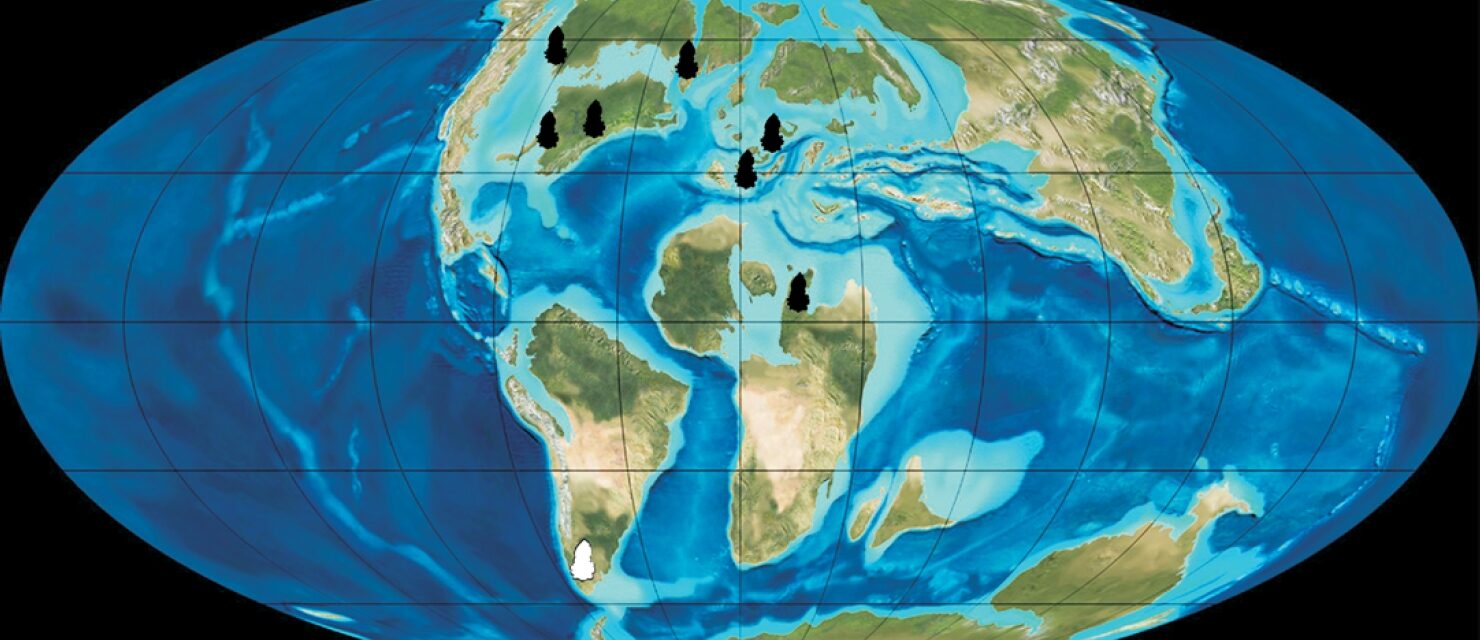
As the continents became more like what we recognise today, dinosaur groups were able to evolve and compete in their own isolated ecosystems.
During the Cretaceous, the Allosaurs of the Jurassic had become extinct with their relatives, Carcharodontosaurids, taking over the Southern Hemisphere.
However a new group of powerful super-predator had emerged in the north and began to dominate; the Tyrannosaurs.
It is this isolation of ecosystems that allowed different species of dinosaur to develop and thrive without interference from dominant species of the other continents.
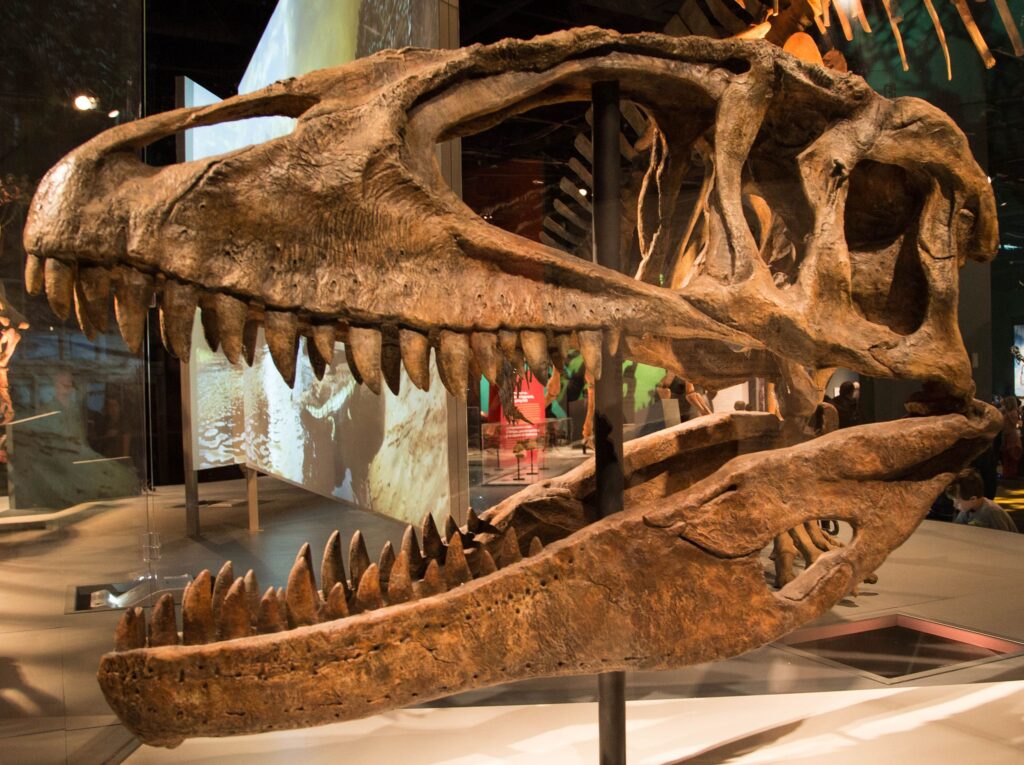
Though most of the holotype Carcharodontosaurus fossils were destroyed in World War II, newer discoveries in 1995 shown that this was one of the largest theropod dinosaurs ever discovered.
The Southern Hemisphere
In the Southern Hemisphere, the Carcharodonotosaurids were king; with the largest being the Giganotosaurus (99-95 million years ago).
Giganotosaurus, discovered in 1993, was the apex theropod of South America. Estimated at being up to 13m long and 13 tonnes, it also had the longest skull of any carnivorous dinosaur at up to 1.80m (5.9ft).
Size estimates have been difficult due to fragmentary remains, but research has led palaeontologists to believe it rivalled the great Tyrannosaurus rex (which would arrive in the Northern Hemisphere almost 30 million years after the Giganotosaurus).
It is this gigantic size that also leads to suggestions that they predated on Argentinosaurus – a titanosaur named after where the two dinosaurs were discovered.
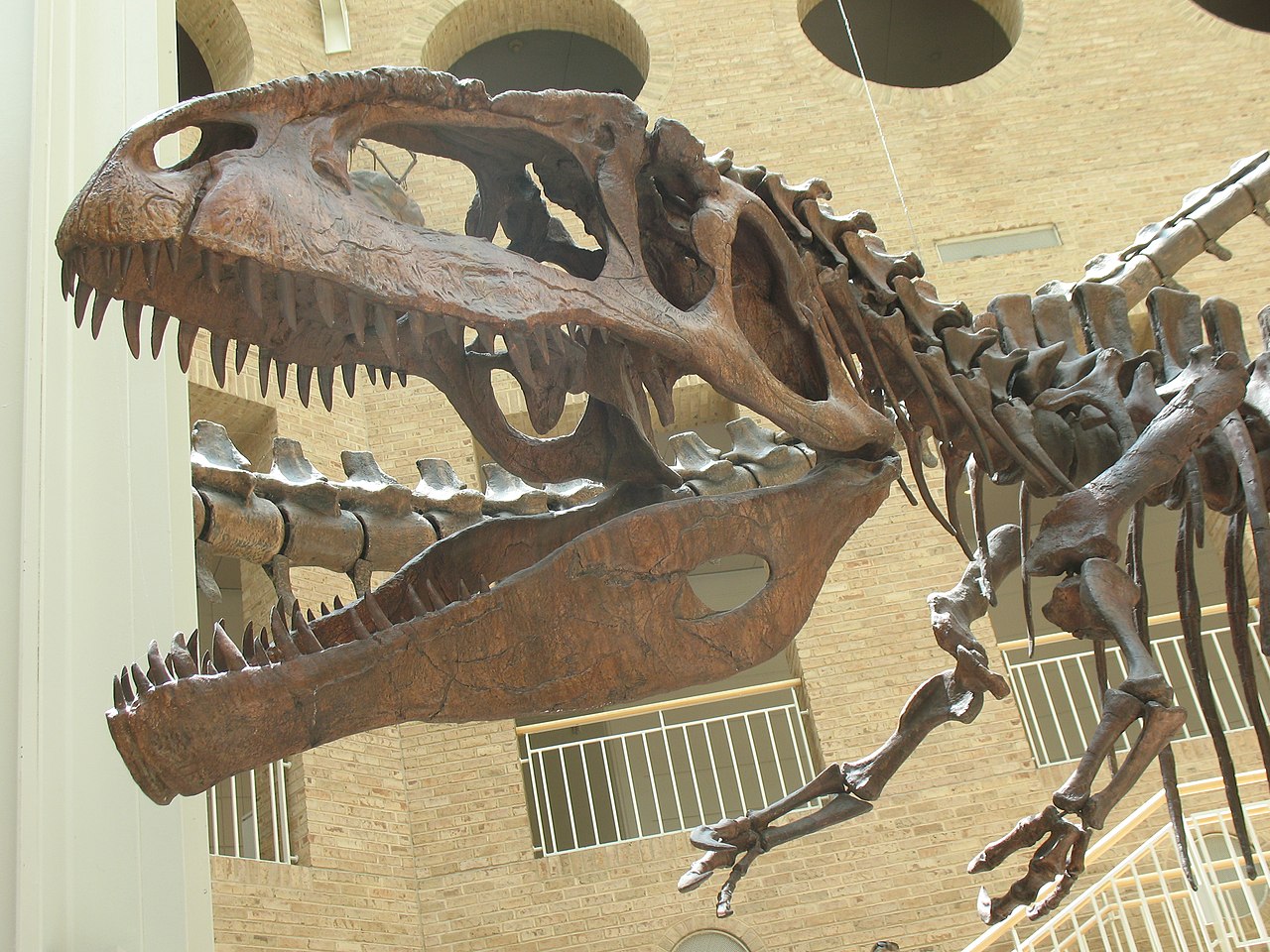
The Giganotosaurus (above) and Carcharodontosaurus were closely related but evolved separately as South America and Africa split apart.
Across the ocean in modern day Africa, the Carcharodontosaurus, “shark-toothed lizard”, roamed the northern regions of the continent.
With fragmentary remains discovered in Morocco, it is suggested that these dinosaurs coexisted with the longest carnivorous dinosaur currently known, Spinosaurus.
Spinosaurus, characterised by tall neural spines protruding from its back vertebrae, is believed to have been semiaquatic, using its long, narrow teeth to feed on fish.
One of these teeth forms part of our collection at the Science and History Museum.
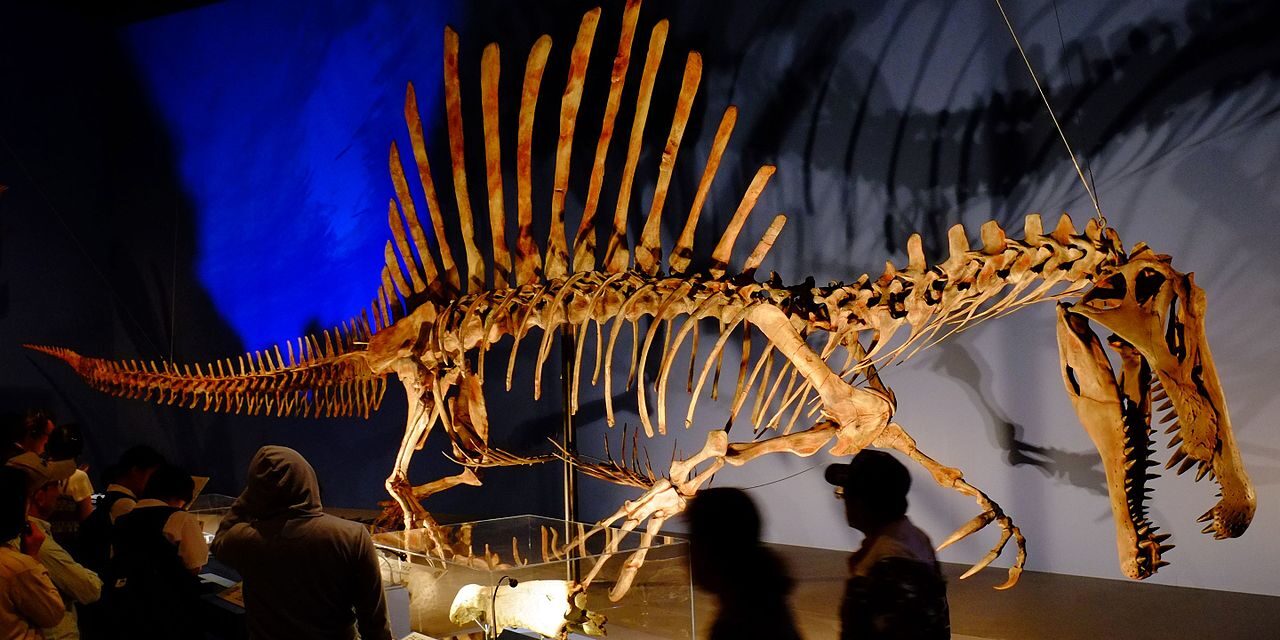
At 14m long, the Spinosaurus was the longest theropod dinosaur but was much more slender and developed for semiaquatic life, weighing 7 tonnes compared to the almost 9 tonnes of the T. rex.
The Northern Hemisphere
After millions of years of evolution, dinosaurs in the Cretaceous were at their biggest. The largest specimens discovered are frequently from this period.
This is no different in the northern continents of the cretaceous (North America, Europe and Asia), where Ornithopod herbivores were mostly split into two huge groups: Ceratopsians and Hadrosaurs.
Ceratopsians were greatly successful throughout the Cretaceous, beginning small like the Psittacosaurus before larger species emerged including the famous Triceratops.
Many dinosaurs in the Ceratopsid family had horned skulls, which would have been used for protection from predators and for duelling against competitors.
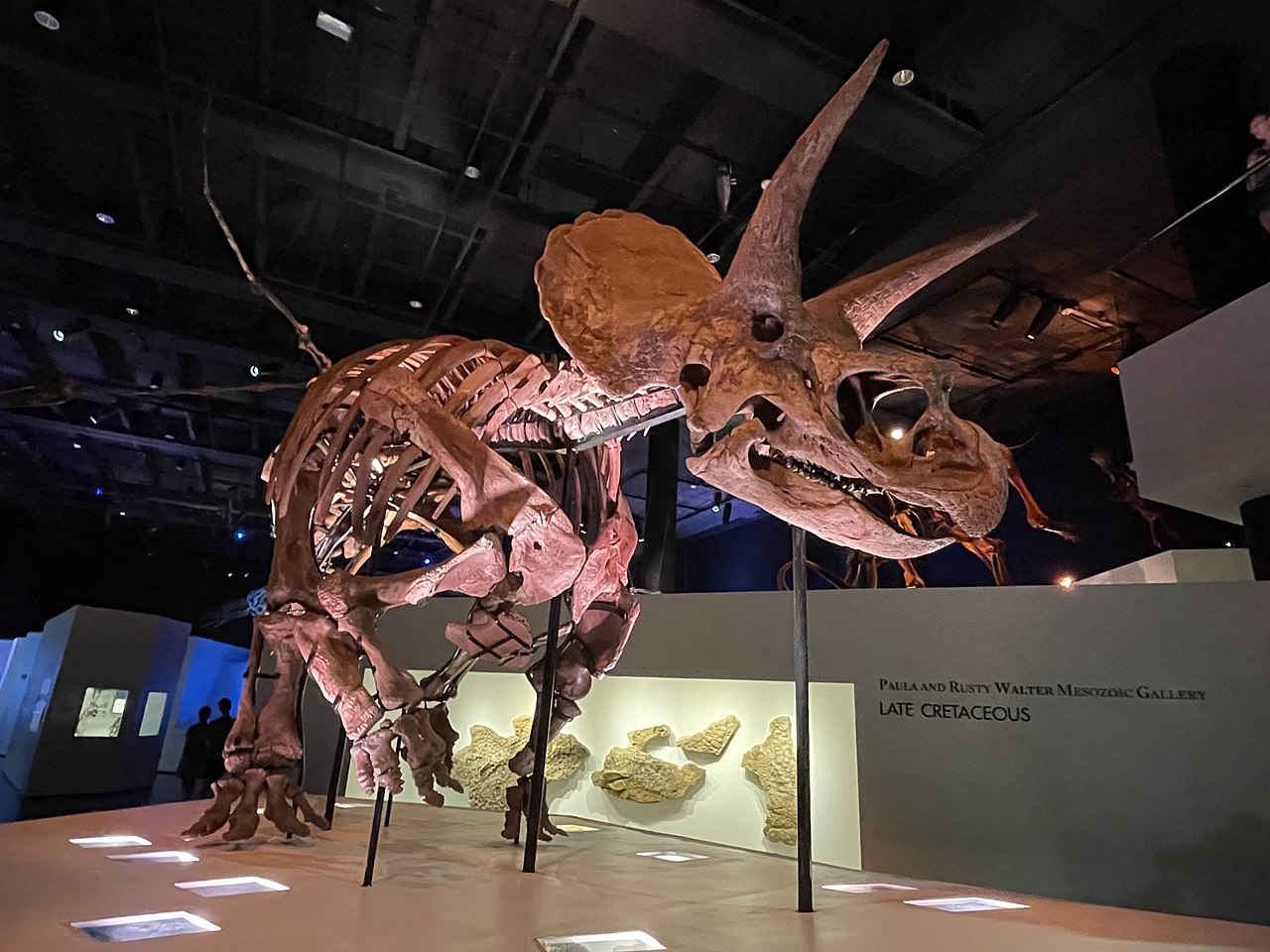
Triceratops horridus is one of the most recognisable dinosaurs with its three horns and large frill; a formidable foe of the T. rex.
Though the most diverse and widespread herbivores in the Northern Hemisphere were the Hadrosaurs (large duck-billed dinosaurs).
Unlike Stegosaurids, Ankylosaurids and Ceratopsians, Hadrosaurs had no distinctive natural defences apart from their sheer size.
Herd protection and a brilliantly developed chewing mechanism via their bills had allowed these creatures to spread across the continents and thrive, resulting in famous species such as Iguanodon and the crested Parasaurolophus.
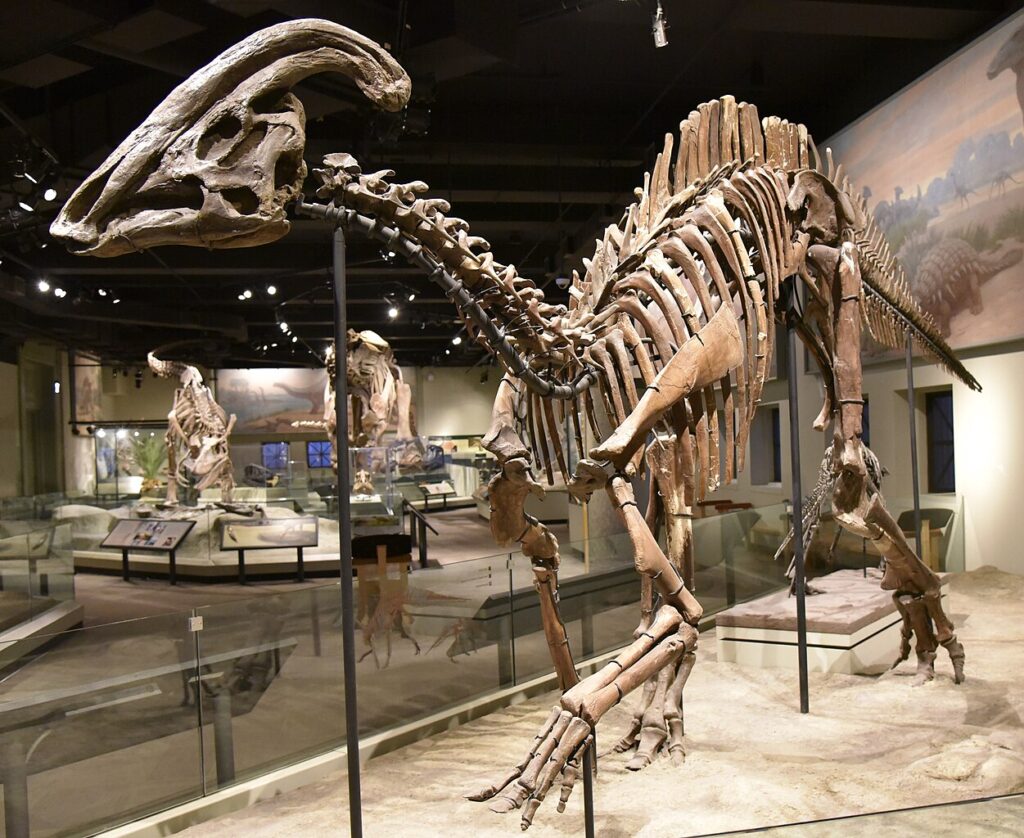
Hadrosaurs (like the Parasaurolophus above) were very large animals. Some species, such as Edmontosaurus would have grown larger than even the biggest carnivores.
The Tyrant Kings
Towards the end of the dinosaur’s reign on Earth, nature had began to perfect its terrestrial predator.
With large, wide skulls armed with thick serrated teeth, the Tyrannosaur family began to dominate wherever its members lived during the mid-late Cretaceous.
Early ancestors of the Tyrannosaurs are rare, with Yutyrannus being one of the earliest species discovered in Asia (125 million years ago). The early Tyrannosaurs that have been found suggest that the family had humble beginnings back in the mid Jurassic, with human-sized species scurrying around the much larger Allosaurids of the time.
However sometime in the mid-Cretaceous (between 110 – 85 million years ago) something happened. Exactly what this was has been a mystery as fossils from this period are extremely rare.
This could have been a mass-extinction event, or a drastic ecological change, but whatever it was seemed to have caused a radical change-up of the diversity of dinosaurs.
Sauropods of the north seemed to disappear (as little/no remains have been found in rock past a certain era), along with the allosaurs and ceratosaurs. Tyrannosaurs, however, survived and took their throne as the dominant predatory force of the north.
Later Tyrannosaurs such as Daspletosaurus and Gorgosaurus (78 – 75 million years ago), along with Albertosaurus (71 – 68 million years ago), were all large apex predators throughout North America, reaching lengths of up to 9 metres.
Tyrannosaurs also dominated Asia, with the Tarbosaurus reaching 10 metres.
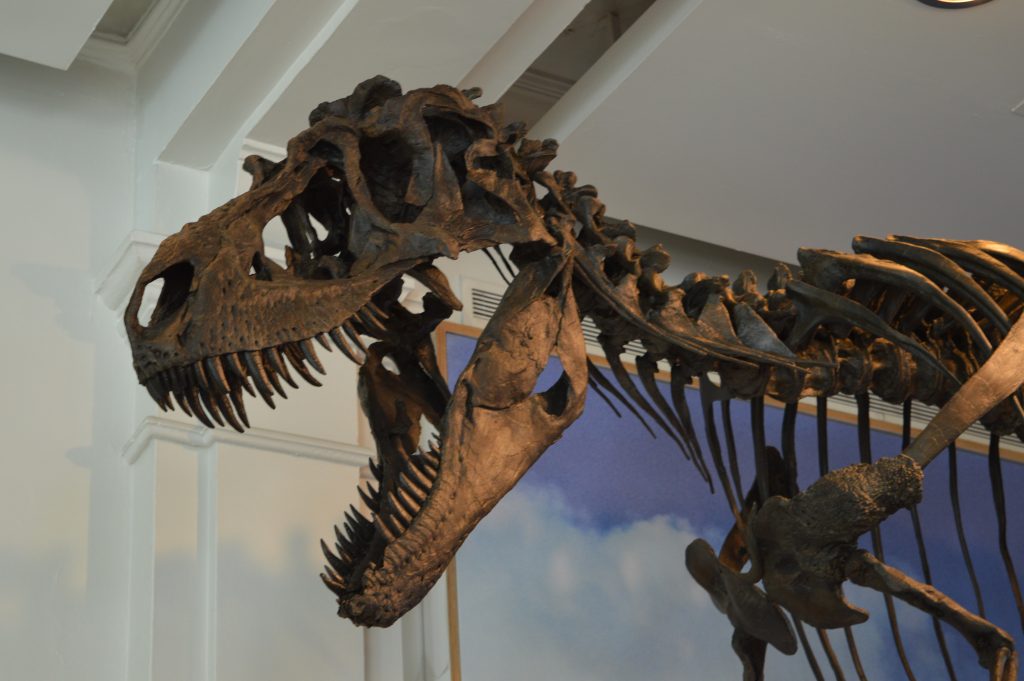
Gorgosaurus (above) was more closely related to Albertosaurus than Tyrannosaurus, but coexisted with Daspletosaurus which was bulkier and better suited for predating on Ceratopsians.
Lord of the Kings
By approximately 20 million years from the end of the Cretaceous, the king of the Tyrannosaurs had emerged.
Discovered in 1902 by Barnum Brown whilst fossil hunting in Montana, this dinosaur was much larger than anything found before it. A few years later the famed scientist and president of the American Museum of Natural History, New York, Henry Fairfield Osborn unveiled the Tyrannosaurus rex, the “tyrant lizard king”.
The T. rex immediately became notorious around the world, and has since held the title as the most famous dinosaur to have ever existed.
This fame driven a priority in the palaeontology world with museum and research budgets focussed on discovering more and more about the king of the dinosaurs.
As such, the T. rex is the most studied dinosaur with over 40 specimens found; some nearly complete and one with soft tissue remains. The plethora of studies have allowed us to have an unmatched understanding of the T. rex, from its lifecycle through juvenility and adulthood, to its hunting behaviours.
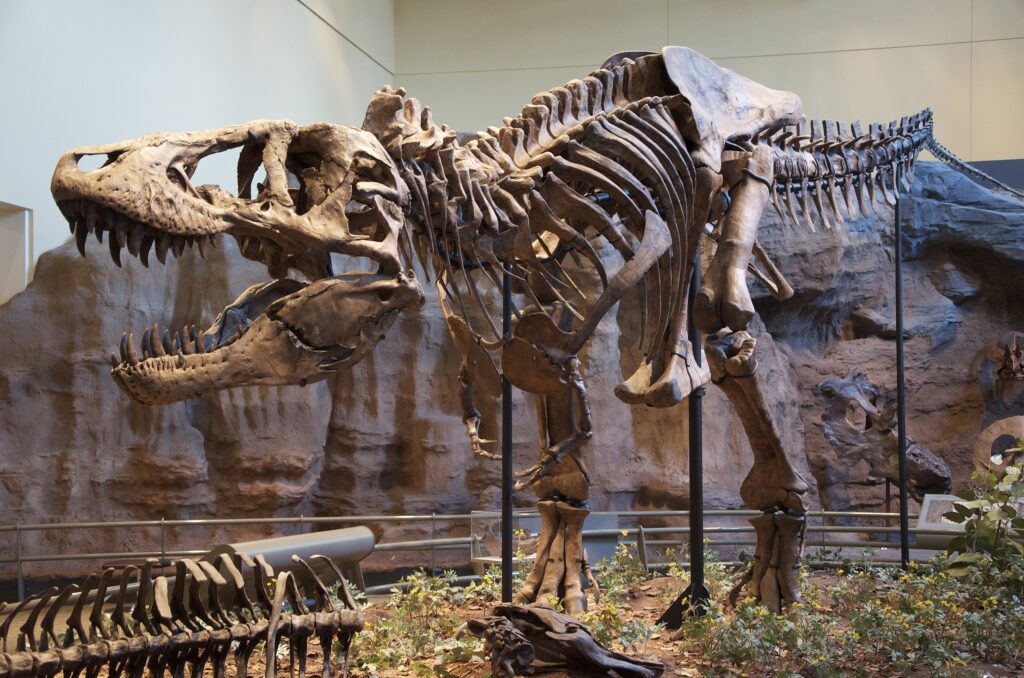
The Tyrannosaurus rex was the largest (when considering both size and weight) theropod dinosaur ever found with a skull designed for crushing bone.
With binocular vision and thick, 12inch long teeth, the T. rex was a well evolved predator.
The shape of its skull has led simulation research to conclude that the Tyrannosaurus had the strongest bite of any land animal in history, up to ten times more powerful than a modern alligator.
It is the muscle mass and conceived intelligence that sets this species apart from other large therapods.
Theories over time, including the idea that T. rex was too large to hunt and instead scavenged have been debunked through fossil evidence such as T. rex teeth being found embedded into the skeletons of Hadrosaurs where the bone had healed around the tooth, suggesting a failed hunt of a surviving herbivore.
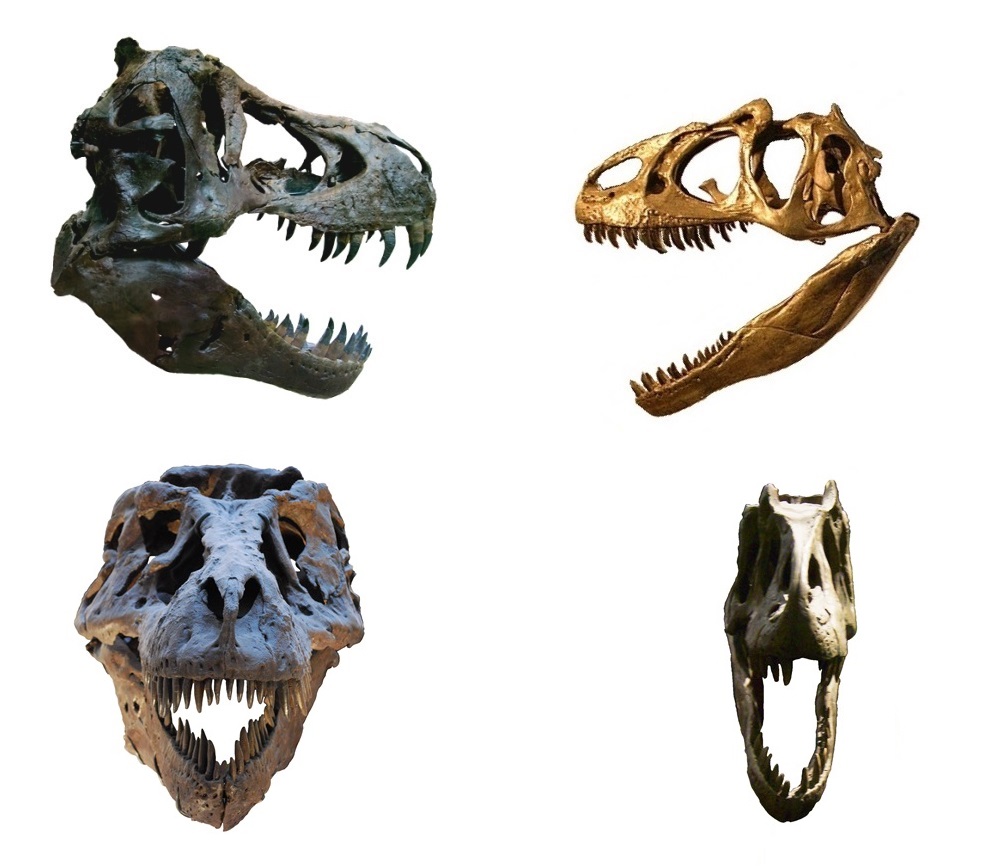
Comparison of skull sizes between a Tyrannosaurus rex (left ) and an Allosaurus (right). Whilst length between Tyrannosaur skulls and other large therapods is comparible, the width and strength is not.
The End of a Dynasty
Dinosaurs had been fighting for survival over 175 million years through the Triassic, Jurassic and Cretaceous geological periods, reigning supremacy over the earth for 135 million years.
Extinction events had plagued life on earth since the end of the Ordovician age 440 million years ago, but Dinosaurs had adapted and survived through several during their time on Earth.
However one final event, known in science as the K-T extinction, would end the rule of the Dinosaurs and begin the age of the Mammals.
This is evident in rock layers where fossilised animals and plants that were abundant far into the Cretaceous suddenly stop at the 66-65 million year point.
Whatever happened all those years ago wiped out around 75% of all plants and animals on Earth. Whilst still up for scientific debate, the strongest theory is that this event was caused by an asteroid impact.
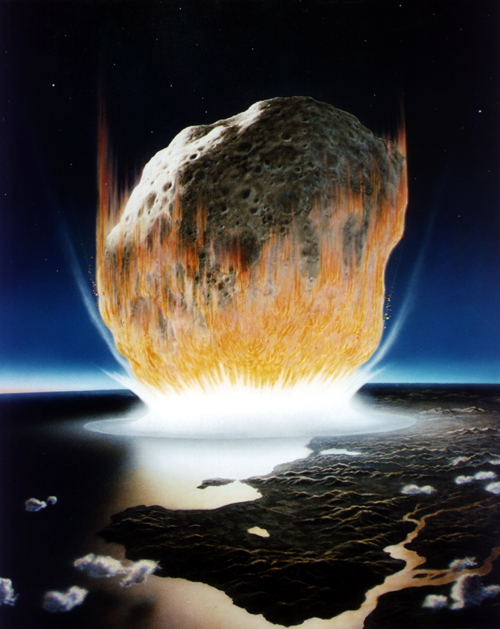
A c.200km wide, 20km deep impact crater off the coast of Mexico has been studied to find that the culpable asteroid hit the earth approx. 66 million years ago, coinciding with the disappearance of the dinosaurs.
The asteroid that struck the earth 66 million years ago is estimated to have been approximately 10km wide.
Whilst the impact would have immediately killed everything in proximity to the impact, the remaining life elsewhere on the planet (25% of what existed prior) would be plunged into a long battle for survival.
The immense quantities of material thrown into the atmosphere would cause soot to travel around the Earth. This would have reduced the light that reached any remaining plant life, affecting growth.
This long-term impact on whole ecosystems, and on-going climate change issues from a surge in volcanic activity led to the extinction of most animals at the time including ammonites, marine reptiles and almost all dinosaurs.
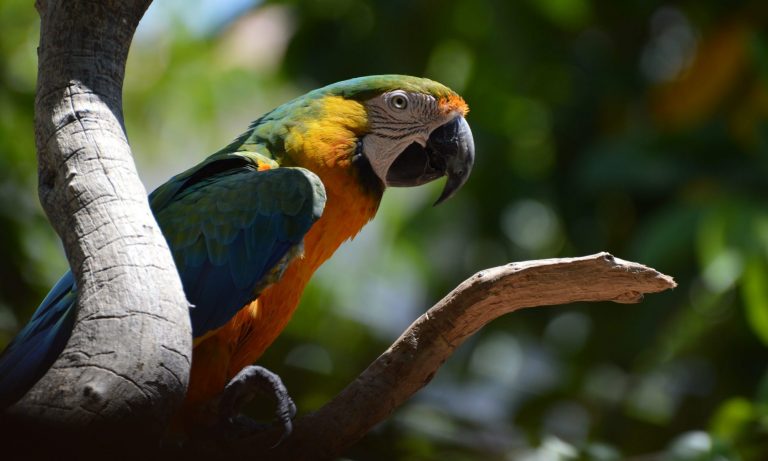
All modern birds are the last living descendants of a line of theropod dinosaurs. Other non-avian dinosaurs are extinct.
All life over 25kg in weight would have died from lack of resources.
Leaving insects, small mammals, reptilians, fish and crocodilians to fight for dominance of this new world.
But amongst them were the last surviving clade of dinosaur, related to the Dromaeosaurs (raptors) of the Cretaceous, the birds.
Whilst many species of bird would have also become extinct, those that survived would eventually evolve and descend into the many varieties of bird we see today.
But as this lineage of birds would themselves diversify around the globe, the demise of the dinosaur’s dynasty would also allow the mammals to eventually thrive.
Image Sources
“Pangea in the Cretaceous“, by Santamarina et. al., licensed under CC BY 4.0.

“Carcharodontosaurus Skull” by Matthew Deery, licensed under CC By 2.0.

“Giganotosaurus Skeleton“, by James Emery, licensed under CC By 2.0.

“Reconstructed Spinosaurus Skeleton” by Kumiko, licensed under CC by SA 2.0.

“Triceratops Skeleton” by Augustios Paleo, licensed under CC BY 4.0.

“Parasaurolophus Skeleton” by Zissoudisctrucker, licensed under CC BY 4.0.

“Tyrannosaurus Rex skeleton” by Scott Robert Anselmo, licensed under CC by SA 3.0

“T. rex and Allosaurus Skulls” by Scott Robert Anselmo, licensed under CC by SA 3.0

“Asteroid Impact” by Don Davis of NASA, via Wikimedia Commons

Image Sources
“Volcanic Eruption“, by Kevin Sebold, licensed under CC BY 3.0.

“Pangea by the Middle Jurassic“, by Sammy2012, licensed under CC BY-SA 4.0.

“Dilophosaurus“, by Eduard Sola, licensed under CC BY-SA 3.0

“Allosaurus and Stegosaurus at Los Angeles Natural History Museum“, by Poole Party, licensed under CC BY-SA 4.0.

“Stegosaurus at the Natural History Museum, London“, by Jeremy Knight, licensed under CC BY 2.0
.jpg)
Image Sources
“Herrerasaurus Skull“, by AStrangerintheAlps, licensed under CC BY 3.0.
